

10 Signs Your Website Needs an SEO Audit
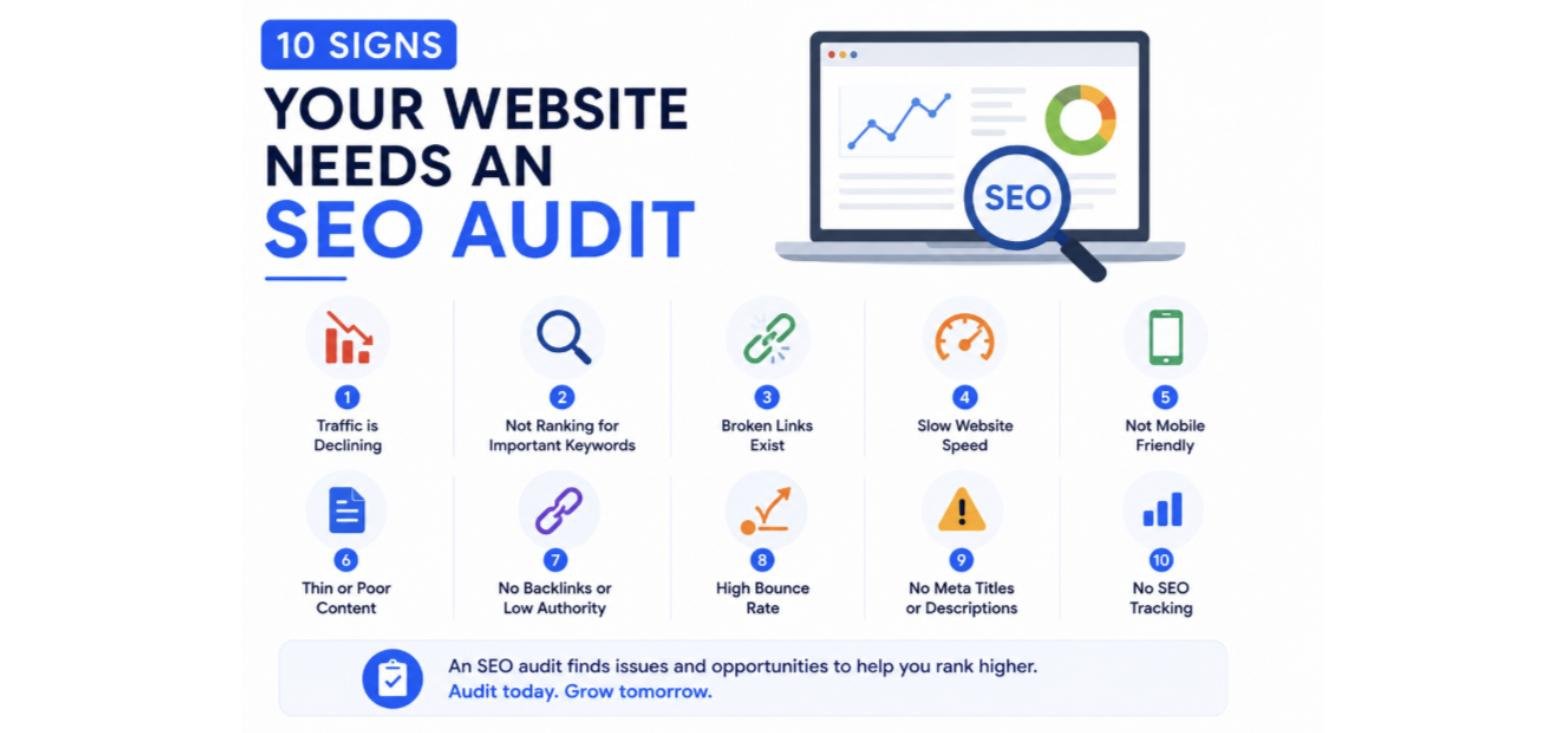
Quick Answer
If your website has experienced a drop in traffic, lower search rankings, fewer leads, slow loading times, or indexing issues, it’s time for an SEO audit. An SEO audit identifies technical errors, content gaps, on-page issues, and other factors that may be preventing your website from performing well in search engines.
Why an SEO Audit Is Important
Your website may look great, but that doesn’t necessarily mean it’s performing well in search results.
Search engine algorithms change regularly, competitors improve their websites, and technical issues can develop over time. Even small problems—like broken links or duplicate content—can affect your visibility on Google.
An SEO audit helps uncover these hidden issues before they start costing you traffic, leads, and revenue.
Here are ten common signs that your website needs a professional SEO audit.
1. Your Organic Traffic Is Declining
One of the biggest warning signs is a noticeable drop in organic traffic.
If your website was attracting visitors consistently but has recently started losing traffic, there could be several reasons:
- Algorithm updates
- Technical issues
- Poor content performance
- Increased competition
- Indexing problems
An SEO audit helps identify the root cause and provides a plan to recover your rankings.
2. Your Keyword Rankings Have Dropped
If important keywords that once ranked on the first page have slipped down the search results, your visibility will naturally decrease.
Ranking drops often happen because of:
- Outdated content
- Stronger competitors
- Technical SEO issues
- Poor backlink quality
Monitoring keyword performance regularly makes it easier to spot these problems early.
3. Your Website Loads Slowly
Website speed affects both user experience and SEO.
Visitors expect pages to load quickly. If your website takes too long, many users will leave before viewing your content.
An SEO audit checks factors such as:
- Large images
- Slow hosting
- Unoptimized code
- Excessive plugins
- Poor Core Web Vitals
Improving page speed benefits both users and search engines.
4. You’re Getting Website Traffic but Few Leads
Traffic alone doesn’t grow your business.
If visitors aren’t filling out forms, making purchases, or contacting you, your website may have issues with:
- User experience
- Content quality
- Internal linking
- Calls-to-action
- Landing page optimization
An SEO audit evaluates both traffic quality and conversion opportunities.
5. Your Website Isn’t Mobile-Friendly
Most users now browse on smartphones.
If your website isn’t responsive or difficult to navigate on mobile devices, visitors are likely to leave quickly.
A mobile SEO audit checks:
- Responsive design
- Mobile page speed
- Navigation
- Readability
- Touch-friendly elements
Google also prioritizes mobile-friendly websites in its rankings.
6. Important Pages Aren’t Appearing on Google
Have you published valuable content that never appears in search results?
Possible causes include:
- Indexing issues
- Blocked pages
- Incorrect robots.txt settings
- Missing XML sitemap
- Canonical tag errors
An SEO audit identifies these technical issues and helps ensure search engines can properly crawl your website.
7. Your Competitors Keep Outranking You
If competing businesses consistently appear above your website, they’re likely doing something better.
An SEO audit compares your website with competitors by analyzing:
- Content quality
- Backlinks
- Keyword targeting
- Technical performance
- User experience
This helps identify opportunities to close the gap.
8. Your Website Has Technical SEO Errors
Many SEO problems aren’t visible to visitors.
Common technical issues include:
- Broken links
- Duplicate pages
- Missing meta tags
- Redirect errors
- Crawl issues
- Slow server response
- Structured data errors
These problems can prevent search engines from understanding and ranking your website effectively.
9. Your Content Hasn’t Been Updated in Years
SEO isn’t a one-time activity.
Old content can become outdated, inaccurate, or less useful compared to newer competitor pages.
Refreshing your content by adding current information, improving readability, updating keywords, and expanding sections can improve rankings and user engagement.
10. You Haven’t Performed an SEO Audit Recently
Search engines evolve, customer behavior changes, and competitors continue improving their websites.
A regular SEO audit helps you:
- Maintain rankings
- Identify new opportunities
- Fix technical problems
- Improve website performance
- Stay ahead of competitors
For most businesses, conducting an SEO audit at least once or twice a year is a good practice.
What Does an SEO Audit Include?
A comprehensive SEO audit typically reviews:
- Technical SEO
- Website speed
- Core Web Vitals
- Mobile usability
- Keyword rankings
- On-page SEO
- Internal linking
- Content quality
- Backlink profile
- Schema markup
- Crawlability
- Indexing
- Local SEO (if applicable)
The goal is to create a clear action plan for improving search visibility.
Benefits of a Professional SEO Audit
A thorough audit can help your business:
- Increase organic traffic
- Improve keyword rankings
- Enhance user experience
- Identify hidden technical issues
- Boost conversion rates
- Strengthen website performance
- Prepare for future Google updates
Rather than guessing what needs improvement, an SEO audit provides data-driven insights.
Frequently Asked Questions
How often should I perform an SEO audit?
Most businesses should conduct a comprehensive SEO audit every six to twelve months or after major website changes.
Can an SEO audit improve rankings?
An audit itself doesn’t improve rankings, but fixing the issues it uncovers can significantly enhance your website’s SEO performance.
How long does an SEO audit take?
Depending on the size of the website, a complete audit may take anywhere from a few hours to several days.
Is an SEO audit necessary for small businesses?
Yes. Small businesses can benefit greatly from identifying issues that prevent them from competing effectively in local and organic search.
What’s the difference between a technical audit and a full SEO audit?
A technical audit focuses on website performance, crawlability, and indexing, while a full SEO audit also evaluates content, keywords, backlinks, on-page optimization, user experience, and competitive analysis.
Final Thoughts
Your website may be attracting visitors today, but SEO performance can change quickly if technical issues go unnoticed or competitors strengthen their strategies. Regular SEO audits help you identify weaknesses before they become major problems.
Whether it’s declining traffic, slow page speed, indexing errors, or outdated content, addressing these issues early can improve your search visibility and deliver a better experience for your visitors. Treat an SEO audit as a routine health check for your website—it keeps your online presence strong, competitive, and ready for future growth.
Need a Professional SEO Audit?
At SEO Mind Tech, we perform comprehensive SEO audits that go beyond basic reports. Our experts analyze your website’s technical performance, content quality, keyword rankings, backlink profile, Core Web Vitals, and overall SEO health to uncover opportunities for growth.
We provide clear recommendations and actionable strategies to help you improve rankings, increase organic traffic, and generate more qualified leads.
Contact SEO Mind Tech today for a complete SEO audit and discover what’s holding your website back from reaching its full potential.